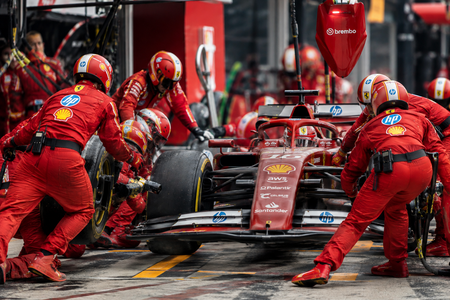
The customer buys for their reasons. Never for yours.


The Customer Wants a Hole in the Wall.
Customers buy for their reasons. Never for yours.
Some sales presentations feel like an engineering department has taken the customer hostage.
Forty slides. Technical specifications. Product architecture. Certifications. Company history. More specifications. More features. More explanations.
And somewhere across the table sits a customer thinking:
“Fine. But how does any of this solve my problem?”
- We keep trying to impress customers with everything we know.
- Everything we have developed. Everything our product can do.
- We want to convince.
- Convince.
- Convince.
But we forget to understand.
The customer does not necessarily want an exceptionally sophisticated, incredibly reliable, technically superior drill.
The customer just wants a hole in the wall.
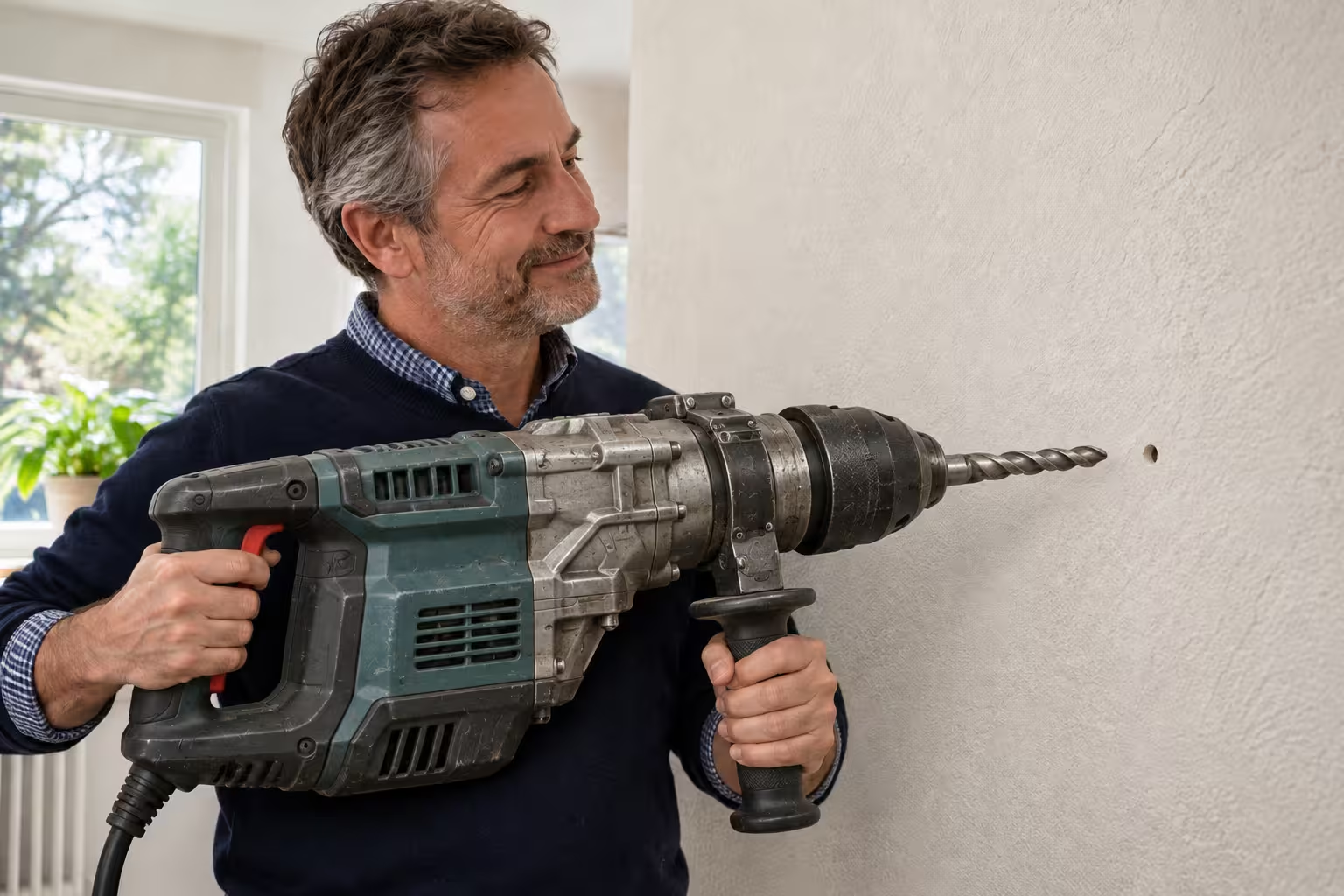
And even that hole serves a purpose. Perhaps they want to hang a picture. Install a shelf. Finish a job before the next customer arrives.
Your drill is part of their solution. It is probably not the center of their world.
Get used to it.
:devider:
Two Companies. One Stranded Customer.
Imagine your car breaks down on the highway.
Traffic is flying past. It is getting dark. You have somewhere to be. Your phone battery is running low.
You search for roadside assistance and find two companies.
The first tells you:
“Our fleet consists of the latest recovery vehicles. Every vehicle is maintained to the highest standards. Our technicians hold multiple certifications, have decades of combined experience, and speak several languages. We operate an extensive service network.”
Wonderful.
You are still standing beside the highway.
The second tells you:
“Wherever you break down, we’ll get you back on the road within 30 minutes. Guaranteed.”

Which one has your attention?
The first company describes its capabilities.
The second understands your situation.
You are not standing there hoping to meet a highly certified technician.
You want to get moving. You want to feel safe. Y
ou want someone to take responsibility and tell you when this miserable interruption will end.
That is your reason to buy.
Of course, a promise like that must be deliverable. A bold headline without operational substance is a broken promise waiting to happen.
But the sales lesson is clear: start with the outcome the customer needs. Then explain why you can deliver it.
Your Technical Excellence Needs a Customer Purpose.
Technical competence matters. Reliability matters. Certifications can matter enormously.
But their relevance depends on the customer’s problem.
A technically sophisticated product may reduce downtime.
A well-maintained service fleet may make response times more dependable.
An experienced technician may solve the problem on the first visit.
Make that connection.
Do not leave the customer to translate your features into value while you advance to slide 37.
“Our motor has these technical characteristics” is information.
“This reduces the risk of an unplanned shutdown in your production line” connects that information to a business concern.
And then comes the question that makes the conversation useful:
“What does an hour of downtime cost you?”
Now you are discussing the customer’s business.
Now the specifications have a purpose.
Ask Until You Understand the Buying Reason.
Before you build your pitch, find out what the customer needs to achieve.
- What is going wrong today?
- What must improve?
- Why now?
- What happens if nothing changes?
- Who will have to defend the decision internally?
- What evidence will they need?
Listen carefully to the answers.
- One customer needs speed.
- Another needs predictability.
- Another needs lower operating costs.
- Another needs a supplier who will answer the phone when something goes wrong at two in the morning.
The same product can serve very different buying reasons.
If your pitch stays identical regardless of who is sitting across the table, you are probably talking too much about yourself.
Use the customer’s language. Address the customer’s priorities. Build your argument from the customer’s position.
Your internal enthusiasm for a feature does not automatically make it a purchasing criterion.
Recognize When You Have Said Enough.
There is another expensive sales habit: continuing to present after the customer has heard what they need.
- They ask about delivery.
- You explain another feature.
- They ask about implementation.
- You open another technical slide.
- They ask how quickly you can start.
- You return to your company’s global footprint.
- Pay attention.
Those questions may signal that the customer is already considering how to move forward. Find out what remains unresolved. Confirm the decision criteria. Agree on the next step.
Do not bury a buying signal under another ten slides.
A strong salesperson knows the product.
An excellent salesperson knows which parts of that knowledge matter to this customer—and when to stop talking.
Before your next pitch, look at every slide and ask:
“Which customer concern does this answer?”
If you cannot answer, question why the slide is there.
The customer has a problem to solve, a result to deliver, and reasons for choosing whom to trust.
- Find those reasons.
- Build your case around them.
- Prove you can deliver.
The customer buys for their reasons. Never for yours.
And sometimes, all they need to hear is:
“We understand. We’ll get you back on the road.”
About Ulvi I. AYDIN
Ulvi I. AYDIN: Als international agierender Interim-CEO und -CSO unterstützt er mittelständische Unternehmen und Konzerne bei Marken- und Marktentwicklung, Neu-Positionierung, Organisations-Entwicklung, Restrukturierung und Vertriebsexzellenz.