


Be an benchmarking tourist!

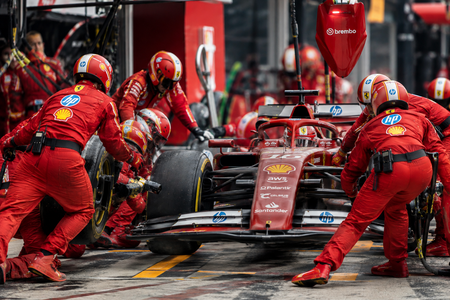
What Pediatric Heart Surgeons Learned from Ferrari – Benchmarking at Its Best
Anyone who looks for the best only within their own industry has fundamentally misunderstood benchmarking.
A remarkable story from pediatric cardiac surgery demonstrates what can happen when people are willing to look beyond their own industry and learn from the best in the world.
What do pediatric heart surgeons and Formula 1 pit crews have in common?
At first glance: absolutely nothing.
One group fights to save the lives of critically ill children. The other fights to shave fractions of a second off lap times.
And yet, they share something crucial: Both must master highly complex procedures under enormous time pressure. Every movement must be precise. Every team member must know exactly what to do. Every mistake can have serious consequences.
It was precisely this common ground that led to one of the most fascinating benchmarking projects I have ever come across.
:devider:
When Pediatric Heart Surgeons Went to School at Ferrari
At London's renowned Great Ormond Street Hospital, pediatric cardiac surgeons were facing a serious challenge.
Open-heart surgery on children was an extremely complex procedure. But one of the most critical phases actually began after surgery: transferring young patients from the operating room to the intensive care unit.
Ventilators had to be switched. Monitoring equipment had to be connected. Medications had to be checked. Vital information had to be communicated.
Multiple specialists. Multiple tasks. Very little time. And an enormous potential for error.
The doctors could have visited other hospitals. They could have organized medical conferences or established additional working groups.
Instead, they asked a completely different question:
Who in the world has mastered the art of coordinating multiple specialists with absolute precision under extreme time pressure?
The answer was surprising.
Ferrari. Formula 1. The pit stop.
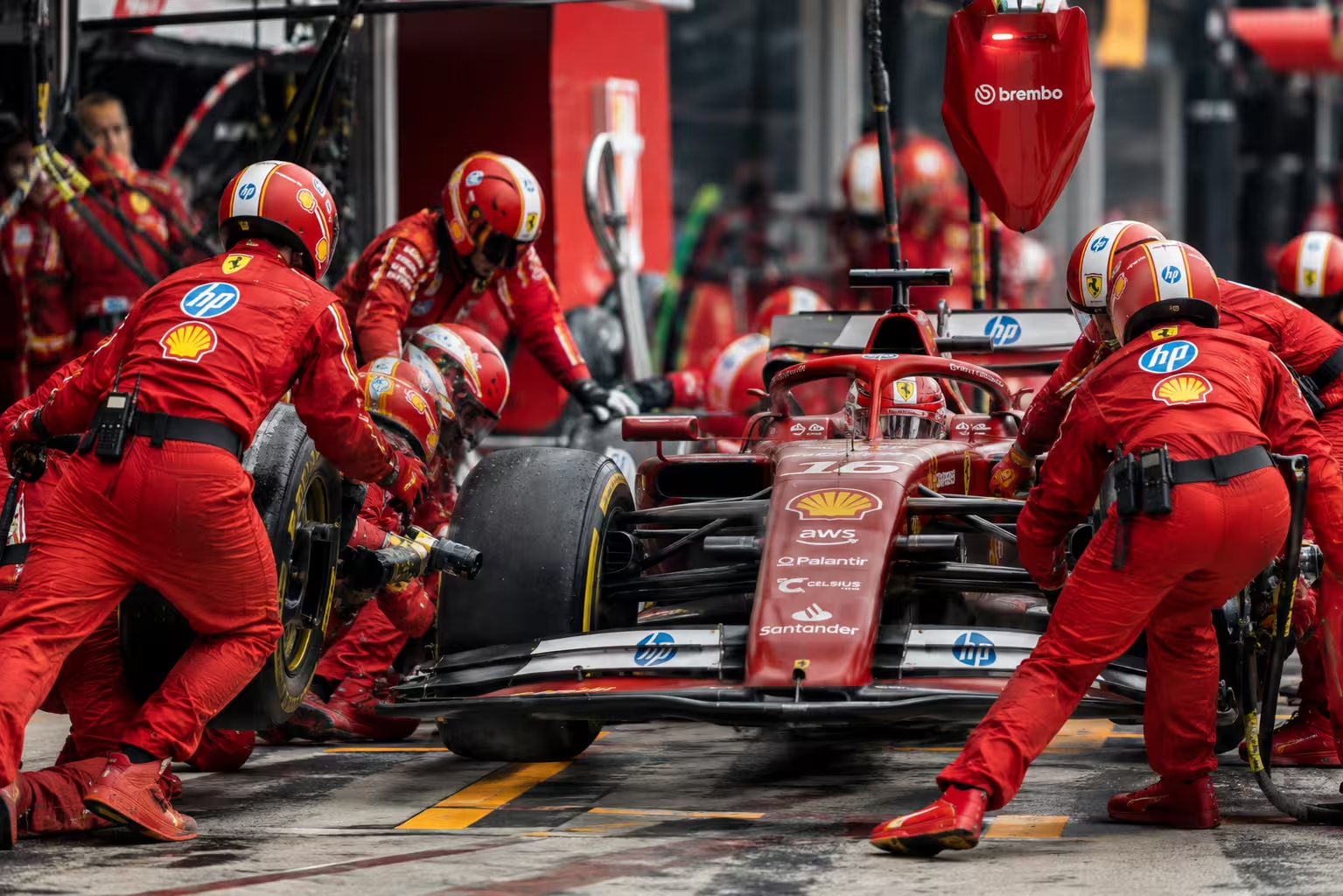
A Formula 1 Pit Stop Becomes a Model for Intensive Care
The medical team visited Ferrari in Maranello, Italy, and studied how its pit crew operated.
What they witnessed was not frantic activity.
It was an almost perfectly choreographed performance.
Every mechanic knew exactly what to do. Every movement had been practiced. The sequence of actions was clearly defined. Communication was reduced to what was absolutely necessary. Responsibilities were unmistakable, and safety routines were deeply ingrained.
Above all, nobody improvised when a proven procedure already existed.
The doctors transferred these principles to their patient handover procedures, also incorporating lessons from the aviation industry.
Clear leadership. Clearly assigned responsibilities. Standardized procedures. Checklists. Focused communication. Repeated training.
What had previously been a complex and potentially chaotic handover became a structured, coordinated, and far more controlled process.
:devider:
The Results? Impressive!
In a scientific study involving 50 patient handovers, researchers compared performance before and after the new procedures were introduced.
The improvements were remarkable:
- Approximately 42% fewer technical errors.
- Approximately 49% fewer information omissions.
- Approximately 13% shorter handover times.
Fewer errors. Better communication. Greater efficiency.
And all of this in an environment where mistakes can have devastating consequences.
These findings came from a relatively small study, but the improvements were measurable and highly relevant.
This is not some abstract management theory from a business school textbook.
This is benchmarking in action. With measurable results.

Benchmarking Is Not a Corporate Field Trip!
And this is where, in my view, the real lesson begins.
Many companies believe benchmarking means comparing themselves with their direct competitors.
They analyze competitors' KPIs, organizational structures, processes, market shares, and operating models.
They organize workshops, prepare presentations, and identify so-called best practices.
There is nothing fundamentally wrong with that.
But it is far too narrow-minded!
If all you ever do is copy your competitors, the best you can hope for is to become as good as your competitors.
:devider:
Truly outstanding benchmarking begins with a completely different question:
Who in the world performs the specific capability we need to improve better than anyone else?
If you want to learn world-class logistics, you don't necessarily need to visit a competitor.
If you want to master exceptional customer service, perhaps you should study a five-star luxury hotel.
If you want to understand operational precision, take a closer look at aviation.
And if you want to learn how to execute flawlessly under extreme time pressure, you might want to visit a Formula 1 racing team.
The industry is irrelevant.
The capability is everything.
:devider:
The Biggest Obstacle Isn't Competence. It's Ego.
Just imagine the situation.
Highly qualified pediatric heart surgeons, who have spent years studying medicine and who save children's lives every single day, visit a group of racing mechanics to learn how to improve their own performance.
Think about the mindset required to do that.
Curiosity. Openness. Humility. And the willingness to acknowledge that someone from an entirely different world might be better at a particular skill than you are.
That takes confidence.
And it takes courage.
Unfortunately, this is exactly where many executives fail.
They are so convinced of their own expertise, their own industry experience, and their own organization's capabilities that they never even consider looking elsewhere for solutions.
They confuse experience with superiority.
They confuse seniority with competence.
And they confuse knowing their own business with knowing everything worth knowing.
The critical question is not who possesses the knowledge. It is who is willing to learn from it and put it into practice.
That is the difference between managers who protect the status quo and leaders who drive genuine improvement.
:devider:
Benchmarking Must Deliver Results.
Not PowerPoint Presentations.
For me, world-class benchmarking follows five straightforward steps:
1. Identify the problem.
What exactly are we trying to improve? Speed? Quality? Precision? Customer satisfaction? Productivity? Safety?
Be specific. Define the problem. Establish the baseline.
2. Find the world's best.
Who performs this particular capability exceptionally well?
Forget industry boundaries. Forget conventional thinking. Look for genuine excellence wherever it exists.
3. Understand the underlying principles.
What makes these people or organizations so successful?
Is it their processes? Their leadership? Their training? Their discipline? Their communication? Their performance culture?
Don't simply copy what they do.
Understand why it works.
4. Adapt, implement, and train.
Translate the principles into your own organization.
Establish clear responsibilities. Redesign processes. Train your people. Eliminate unnecessary complexity.
And most importantly: execute!
5. Measure the results.
What has actually improved?
How much faster have we become?
How many errors have we eliminated?
How much productivity have we gained?
What measurable value have we created?
If you cannot demonstrate an improvement, you haven't completed the benchmarking exercise.
Everything else is what I call benchmarking tourism.
The pediatric heart surgeons in London didn't simply visit Ferrari and return with an interesting travel report.
They observed.
They learned.
They adapted.
They implemented.
They measured.
And that is precisely why this story is so extraordinary.
:devider:
My Conclusion: The Best Learn from the Best. Period.
Ferrari's mechanics didn't need medical degrees to teach the surgeons something valuable.
And the surgeons didn't need to become racing drivers to learn from Ferrari.
Both sides simply had to recognize that world-class performance is built on principles that extend far beyond the boundaries of individual industries.
Precision. Discipline. Preparation. Teamwork. Clear accountability. Relentless execution.
These principles are universal.
And so is the pursuit of excellence.
:devider:
Excellence knows no industry boundaries.
If you genuinely want to improve, you must be willing to learn wherever the best can be found.
Not where it is most convenient.
Not where everyone else is looking.
Not where conventional wisdom tells you to go.
But where genuine excellence exists.
And then you have to do something with what you have learned.
Because knowledge without execution is worthless.
Benchmark the best. Learn from the best. Execute better than the rest.

About Ulvi I. AYDIN
Ulvi I. AYDIN: Als international agierender Interim-CEO und -CSO unterstützt er mittelständische Unternehmen und Konzerne bei Marken- und Marktentwicklung, Neu-Positionierung, Organisations-Entwicklung, Restrukturierung und Vertriebsexzellenz.


