Auch wenn es eigentlich ein Soft-Factor ist:Vertrauen ist eine harte Währung!Eine sehr harte!
*
Minuten
Auch wenn es eigentlich ein Soft-Factor ist:
Vertrauen ist eine harte Währung!
Eine sehr harte!
No items found.
AYCON Blog
November
5
,
2026
2026
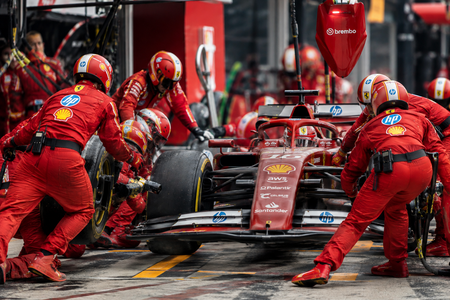
What Pediatric Heart Surgeons Learned from Ferrari – Benchmarking at Its Best Anyone who looks for the best only within their own industry has fundamentally misunderstood benchmarking. A remarkable story from pediatric cardiac surgery demonstrates what can happen when people are willing to look beyond their own industry and learn from the best in the world. What do pediatric heart surgeons and Formula 1 pit crews have in common? At first glance: absolutely nothing. One group fights to save the lives of critically ill children. The other fights to shave fractions of a second off lap times. And yet, they share something crucial: Both must master highly complex procedures under enormous time pressure. Every movement must be precise. Every team member must know exactly what to do. Every mistake can have serious consequences. It was precisely this common ground that led to one of the most fascinating benchmarking projects I have ever come across. When Pediatric Heart Surgeons Went to School at Ferrari At London's renowned Great Ormond Street Hospital, pediatric cardiac surgeons were facing a serious challenge. Open-heart surgery on children was an extremely complex procedure. But one of the most critical phases actually began after surgery: transferring young patients from the operating room to the intensive care unit. Ventilators had to be switched. Monitoring equipment had to be connected. Medications had to be checked. Vital information had to be communicated. Multiple specialists. Multiple tasks. Very little time. And an enormous potential for error. The doctors could have visited other hospitals. They could have organized medical conferences or established additional working groups. Instead, they asked a completely different question: Who in the world has mastered the art of coordinating multiple specialists with absolute precision under extreme time pressure? The answer was surprising. Ferrari. Formula 1. The pit stop. A Formula 1 Pit Stop Becomes a Model for Intensive Care The medical team visited Ferrari in Maranello, Italy, and studied how its pit crew operated. What they witnessed was not frantic activity. It was an almost perfectly choreographed performance. Every mechanic knew exactly what to do. Every movement had been practiced. The sequence of actions was clearly defined. Communication was reduced to what was absolutely necessary. Responsibilities were unmistakable, and safety routines were deeply ingrained. Above all, nobody improvised when a proven procedure already existed. The doctors transferred these principles to their patient handover procedures, also incorporating lessons from the aviation industry. Clear leadership. Clearly assigned responsibilities. Standardized procedures. Checklists. Focused communication. Repeated training. What had previously been a complex and potentially chaotic handover became a structured, coordinated, and far more controlled process. The Results? Impressive! In a scientific study involving 50 patient handovers, researchers compared performance before and after the new procedures were introduced. The improvements were remarkable: Approximately 42% fewer technical errors. Approximately 49% fewer information omissions. Approximately 13% shorter handover times. Fewer errors. Better communication. Greater efficiency. And all of this in an environment where mistakes can have devastating consequences. These findings came from a relatively small study, but the improvements were measurable and highly relevant. This is not some abstract management theory from a business school textbook. This is benchmarking in action. With measurable results. Benchmarking Is Not a Corporate Field Trip! And this is where, in my view, the real lesson begins. Many companies believe benchmarking means comparing themselves with their direct competitors. They analyze competitors' KPIs, organizational structures, processes, market shares, and operating models. They organize workshops, prepare presentations, and identify so-called best practices. There is nothing fundamentally wrong with that. But it is far too narrow-minded! If all you ever do is copy your competitors, the best you can hope for is to become as good as your competitors. Truly outstanding benchmarking begins with a completely different question: Who in the world performs the specific capability we need to improve better than anyone else? If you want to learn world-class logistics, you don't necessarily need to visit a competitor. If you want to master exceptional customer service, perhaps you should study a five-star luxury hotel. If you want to understand operational precision, take a closer look at aviation. And if you want to learn how to execute flawlessly under extreme time pressure, you might want to visit a Formula 1 racing team. The industry is irrelevant. The capability is everything. The Biggest Obstacle Isn't Competence. It's Ego. Just imagine the situation. Highly qualified pediatric heart surgeons, who have spent years studying medicine and who save children's lives every single day, visit a group of racing mechanics to learn how to improve their own performance. Think about the mindset required to do that. Curiosity. Openness. Humility. And the willingness to acknowledge that someone from an entirely different world might be better at a particular skill than you are. That takes confidence. And it takes courage. Unfortunately, this is exactly where many executives fail. They are so convinced of their own expertise, their own industry experience, and their own organization's capabilities that they never even consider looking elsewhere for solutions. They confuse experience with superiority. They confuse seniority with competence. And they confuse knowing their own business with knowing everything worth knowing. The critical question is not who possesses the knowledge. It is who is willing to learn from it and put it into practice. That is the difference between managers who protect the status quo and leaders who drive genuine improvement. Benchmarking Must Deliver Results. Not PowerPoint Presentations. For me, world-class benchmarking follows five straightforward steps: 1. Identify the problem. What exactly are we trying to improve? Speed? Quality? Precision? Customer satisfaction? Productivity? Safety? Be specific. Define the problem. Establish the baseline. 2. Find the world's best. Who performs this particular capability exceptionally well? Forget industry boundaries. Forget conventional thinking. Look for genuine excellence wherever it exists. 3. Understand the underlying principles. What makes these people or organizations so successful? Is it their processes? Their leadership? Their training? Their discipline? Their communication? Their performance culture? Don't simply copy what they do. Understand why it works. 4. Adapt, implement, and train. Translate the principles into your own organization. Establish clear responsibilities. Redesign processes. Train your people. Eliminate unnecessary complexity. And most importantly: execute! 5. Measure the results. What has actually improved? How much faster have we become? How many errors have we eliminated? How much productivity have we gained? What measurable value have we created? If you cannot demonstrate an improvement, you haven't completed the benchmarking exercise. Everything else is what I call benchmarking tourism. The pediatric heart surgeons in London didn't simply visit Ferrari and return with an interesting travel report. They observed. They learned. They adapted. They implemented. They measured. And that is precisely why this story is so extraordinary. My Conclusion: The Best Learn from the Best. Period. Ferrari's mechanics didn't need medical degrees to teach the surgeons something valuable. And the surgeons didn't need to become racing drivers to learn from Ferrari. Both sides simply had to recognize that world-class performance is built on principles that extend far beyond the boundaries of individual industries. Precision. Discipline. Preparation. Teamwork. Clear accountability. Relentless execution. These principles are universal. And so is the pursuit of excellence. Excellence knows no industry boundaries. If you genuinely want to improve, you must be willing to learn wherever the best can be found. Not where it is most convenient. Not where everyone else is looking. Not where conventional wisdom tells you to go. But where genuine excellence exists. And then you have to do something with what you have learned. Because knowledge without execution is worthless. Benchmark the best. Learn from the best. Execute better than the rest.
*
Minuten
Be an benchmarking tourist!
Benchmark the best. Learn from the best. Execute better than the rest.
No Data Discipline. No Sales Excellence.
Your CRM is only as good as the information your salespeople put into it. And your sales organization is only as strong as the discipline behind that information. Let’s stop treating CRM data quality as an administrative issue. It is a sales issue. A leadership issue. A performance issue. CRM stands for Customer Relationship Management. Read those three words again. We are managing the entire relationship with the customer: the people, the conversations, the opportunities, the commitments, the decisions, and the next steps. That relationship deserves professional attention. Every day. If your CRM is incomplete, outdated, or unreliable, your follow-up will suffer. Your customer knowledge will suffer. Your ability to win will suffer. Bad data costs business.
Know the People. Know the Business.
Who is your contact? Is the name correct? The title? The salutation? The function? Does that person still work there? Who influences the specification? Who controls the budget? Who makes the decision? Who can open a door—and who can close it? These are basic questions. A professional sales organization must be able to answer them. The same applies to customer visits. A meeting without a useful visit report leaves the organization guessing. What did the customer say? What matters to them? What problem are they trying to solve? What did you promise? Who needs to act? By when? “I had a good meeting” tells us almost nothing. What changed because you were there? What happens next? That belongs in the CRM.
Every Quote Needs an Outcome. Every Outcome Needs a Reason.
How many quotes have we submitted? How many have we won? How many remain open? How many have we lost? And why? A project canceled by the customer is different from a project awarded to a competitor. Record the difference. If we lost, who won? What drove the decision? Price? Delivery time? Technical performance? An established relationship? Did we arrive too late? Did we fail to reach the decision-maker? Did our follow-up fall asleep? “Too expensive” is often where the questioning stops. It should be where the questioning starts. Too expensive compared with whom? By how much? For what scope? Did we explain our value convincingly? Did we understand the buying criteria? We cannot systematically improve what we fail to understand. Every properly documented outcome gives us a chance to sharpen our next move. Every missing explanation forces us to repeat yesterday’s mistakes.
The Sales Rep Owns the Information.
The salesperson who meets the customer owns the responsibility for capturing what matters. You were in the room. You heard the concerns. You made the commitment. You agreed on the next step. Put it into the system. Accurately. Promptly. Completely. Sales operations can support you. Management can set standards. Technology can make the work easier. The responsibility remains yours. A professional salesperson follows through on commitments. Recording them, assigning actions, and setting deadlines are part of that follow-through.
Shut Down the Islands.
Private Excel files. Personal notebooks. Contact lists on individual laptops. Opportunities managed from memory. We should have moved beyond this years ago. When customer knowledge sits in isolated files, the team cannot use it reliably. Colleagues cannot coordinate. A replacement cannot step in. Management cannot see what needs attention. The moment somebody is absent, changes roles, or leaves the company, the gaps become painfully visible. Use your notebook during the meeting if it helps. Then transfer the relevant information into the CRM. One shared system. Clear ownership. Reliable information. That is how individual salespeople become a coordinated sales force.
Discipline Creates Time for Customers.
“I don’t have time to update the CRM.” Then make time to chase forgotten commitments, reconstruct old conversations, and explain why nobody followed up. Enter the information while it is fresh. Assign the task. Set the deadline. Schedule the follow-up. Give every active opportunity a clear next step. These are essential acts of self-discipline. Done consistently, they reduce confusion and unnecessary internal discussions. They help you prepare faster and act with purpose. The goal is more productive time with customers. Data discipline helps create it.
Use AI. Keep Ownership.
Artificial intelligence can make this work much easier. After a customer visit, dictate a short voice note: the essential discussion points, the customer’s concerns, the commitments made, the tasks, the responsible colleagues, and the deadlines. With the right tools and integration, AI can turn that note into a structured visit report, draft tasks, and prepare follow-up reminders. Review it. Correct it. Confirm it. AI can capture your words. You remain accountable for their accuracy.
Keep the Sales Machine Running.
“Data is the new oil.” Then treat it accordingly. Accurate, current, useful information keeps the sales machine lubricated. It connects customer conversations with action. It helps the organization respond faster, coordinate better, and learn from wins and losses. Outdated contacts, missing reports, unexplained losses, and forgotten follow-ups put friction into every moving part. Buying a CRM license achieves very little on its own. The value comes from people maintaining the information and acting on it. No reliable data. No reliable follow-up.
No disciplined follow-up. No consistent sales performance. Maintain the contacts. Document the conversations. Explain the outcomes. Assign the actions. Set the dates. Every customer. Every opportunity. Every time. Data quality is sales work. Own it.
Wer im Markt überzeugen will, muss wissen, wofür er steht. Zwei Tage Gardasee. Klare Worte. Starke Impulse. Und der Anspruch, die eigene Positionierung entscheidend voranzubringen. Erfahrung ist vorhanden. Kompetenz auch. Aber wie wird daraus eine Botschaft, die beim Kunden ankommt? Wie machen wir deutlich, welchen konkreten Nutzen wir bieten? Und warum sollte sich ein Auftraggeber ausgerechnet für uns entscheiden? Genau daran haben wir beim Private Positioning Retreat mit Andreas Renner und mir gearbeitet. Intensiv. Persönlich. Mit offenem Visier und der Bereitschaft, auch die eigenen Überzeugungen kritisch zu hinterfragen. Denn wer sein Profil schärfen will, muss sich Fragen stellen, denen er im Tagesgeschäft gerne ausweicht: Was kann ich besonders gut? Für welche Aufgaben bin ich die erste Wahl? Welche meiner Aussagen sind wirklich überzeugend? Und wo verstecke ich mich noch hinter austauschbaren Formulierungen? Wir haben uns gegenseitig gechallengt. Und genau das hat uns weitergebracht. Wir haben zugehört, nachgehakt, widersprochen und neu formuliert. Aussagen kamen auf den Prüfstand. Geschäftsmodelle wurden hinterfragt. Persönliche Stärken wurden herausgearbeitet und mit den Bedürfnissen potenzieller Kunden verbunden. Aus langen Erklärungen wurden präzisere Botschaften. Aus neuen Gedanken wurden konkrete Ansätze für den eigenen Marktauftritt. Das Besondere war die Haltung in der Gruppe: Jeder brachte seine Erfahrung ein. Jeder stellte sich dem ehrlichen Feedback der anderen. Und jeder wollte dazu beitragen, dass die anderen besser werden. Diese Offenheit hat den Austausch so wertvoll gemacht. Die Rückmeldungen der Teilnehmenden sprechen für sich. Das Seminar wurde als ausgesprochen hilfreich erlebt. Die Teilnehmenden berichteten von wertvollen Denkanstößen, starken Impulsen und neuen Perspektiven auf die eigene Positionierung. Gerade die kritischen Rückfragen und die gemeinsame Arbeit an den persönlichen Aussagen haben viel bewegt. Wer erklären muss, welchen Nutzen er tatsächlich liefert, merkt schnell, wo seine Botschaft schon sitzt – und wo sie noch geschärft werden muss. Der Gardasee bot dafür einen besonderen Rahmen. Abstand zum Alltag schafft Raum für Gedanken, die zwischen Terminen, Telefonaten und laufenden Projekten oft untergehen. Auch beim gemeinsamen Essen und in den Gesprächen abseits des Seminars wurde weitergedacht, diskutiert und an Ideen gefeilt. Andreas Renner und ich verfolgen dabei einen klaren Anspruch: Die Arbeit an der Positionierung muss im beruflichen Alltag Wirkung entfalten. Im Kundengespräch. In der persönlichen Vorstellung. Auf der eigenen Webseite. Und überall dort, wo Menschen entscheiden, wem sie eine anspruchsvolle Aufgabe anvertrauen. Kompetenz verdient einen überzeugenden Auftritt. Dafür braucht es Klarheit, Mut und die Bereitschaft, an sich zu arbeiten. Diese zwei Tage haben gezeigt, wie viel in Bewegung kommt, wenn erfahrene Menschen sich darauf einlassen. Profil schärfen. Nutzen auf den Punkt bringen. Selbstbewusst in den Markt gehen.
IF YOU ARE NOT WILLING TO FIGHT, YOU ARE NOT SERIOUS ABOUT WINNING. Everybody wants to be number one. Few are willing to pay the price. Boardrooms are full of ambitious targets. Revenue growth. Market share gains. Higher profitability. Industry leadership. Everybody wants to win. CEOs want to outperform their competitors. Sales teams want to dominate their markets. Managers want to deliver record results. Organizations want to become number one. Fantastic. But here's the uncomfortable truth: Most people love the idea of winning far more than the reality of fighting for it. They want the trophy without the training. The results without the sacrifice. The victory without the battle. They develop strategies, organize workshops, discuss opportunities, and celebrate their ambitions. But ambition doesn't generate revenue. PowerPoint doesn't win customers. And endless meetings don't increase market share. Execution does. Winning is not an intellectual exercise. It is the consequence of disciplined, relentless action. WINNING IS EASY. FIGHTING IS HARD. Everybody wants to stand on the podium. But who is willing to get up at 4 a.m. to train? Kobe Bryant understood something that many executives still fail to grasp. His legendary Mamba Mentality was built on an uncompromising work ethic. While others were preparing for their first training session at 6 a.m., Kobe had already been working since 4 a.m. He wasn't necessarily more talented than everybody else. He was determined to outwork them. While others were dreaming about success, he was already earning it. That's the difference between wanting to win and being committed to winning. Talent matters. Intelligence matters. Strategy matters. But without discipline, they are worthless. Discipline beats talent. Execution beats intention. Every single time. SALES IS A BATTLE FOR THE CUSTOMER. EVERY SINGLE DAY. And nowhere is this fighting spirit more important than in sales. Great salespeople don't wait for customers to call. They don't hide behind emails, CRM systems, or PowerPoint presentations. They get out there. They show up. They fight for their customers. Again. And again. And again. They visit their customers. They listen. They ask questions. They understand their challenges. They challenge assumptions. They bring solutions. And above all, they demonstrate something that no presentation, brochure, or marketing campaign can replace: Genuine dedication to the customer. When you sit across from a customer, that customer must feel that, at this very moment, nothing is more important to you than their business, their challenges, and their success. Not your sales target. Not your commission. Not your quarterly forecast. THE CUSTOMER. You must earn their trust. Prove your commitment. Demonstrate your value. And do it repeatedly. Because customers don't owe you their business. You have to earn it. And keep earning it. A great salesperson's dedication to the customer should be as relentless as a great athlete's dedication to the basketball court. Think about Kobe Bryant. He didn't become a legend by showing up for games and hoping for the best. He practiced. Repeated. Refined. Improved. Every single day. The basketball court was his battlefield. The customer is yours. A true sales professional approaches every customer interaction with the same preparation, intensity, discipline, and determination. Not to pressure the customer into buying. But to prove, through actions rather than promises, that nobody will work harder to understand their needs and earn their business. Customer dedication is not a sales technique. It is a professional attitude. And it separates outstanding salespeople from ordinary order takers. WE HAVE FORGOTTEN THE PRICE OF PROSPERITY. Look at our parents and grandparents. Many built their prosperity from almost nothing. They worked long hours, saved money, built houses, and created financial security for their families. And they sacrificed. Fewer vacations. Fewer luxuries. No constant weekend getaways. No endless consumption. No expectation of immediate gratification. They understood a simple principle: You cannot have everything without giving up something. Today, we want it all. Career success. Financial independence. Beautiful homes. Expensive cars. Multiple vacations. Maximum comfort. Minimum inconvenience. And preferably a perfect work-life balance on top. We have become so accustomed to prosperity that we sometimes forget what created it in the first place. Hard work. Discipline. Sacrifice. Persistence. Our societies have become wealthier, but comfort has also made too many of us complacent. Too comfortable. Too lazy. Too fat. Not just physically. Mentally. Professionally. Organizationally. And that is dangerous. COMFORT IS THE ENEMY OF COMPETITIVENESS. The same disease affects businesses. Successful organizations become comfortable. Structures grow. Bureaucracy expands. Meetings multiply. Decision-making slows down. People start protecting what they have instead of fighting for what they could achieve. They confuse activity with productivity. They confuse strategy with execution. And they confuse yesterday's success with tomorrow's entitlement. Meanwhile, hungrier competitors are attacking their markets, approaching their customers, and stealing their business. While you're discussing, they're selling. While you're analyzing, they're executing. While you're protecting your comfort zone, they're taking your market share. Your competitors don't care about your excuses. They care about winning. And so should you. STANDING STILL IS AN ILLUSION. There is no permanent position at the top. Markets move. Competitors improve. Technology advances. Customer expectations change. You either move forward or fall behind. Even when your numbers remain stable, your competitive position may already be deteriorating. Yesterday's excellence is tomorrow's mediocrity. That's why complacency is so dangerous. Success is never a permanent achievement. It is a position that must be defended and earned again. Every day. In sports. In business. In life. There is no cruise control on the road to excellence. THE DIFFERENCE BETWEEN WINNERS AND LOSERS IS WHAT THEY DO EVERY DAY. After more than two decades of working with executives and organizations across industries and continents, one lesson stands above the rest. The winners are not necessarily those with the smartest strategies or the most impressive presentations. They are the ones who execute. They visit more customers. They make decisions faster. They confront uncomfortable truths. They take responsibility. They recover from setbacks. And they do the work even when they don't feel like doing it. Because motivation comes and goes. Discipline stays. You don't need another motivational speech. You need another customer visit. Another sales call. Another difficult conversation. Another decision. Another step forward. You don't build a winning organization through annual strategy workshops. You build it through thousands of disciplined actions, repeated consistently. No excuses. No shortcuts. No surrender. STOP TALKING ABOUT WINNING. START FIGHTING FOR IT. If you want extraordinary results, stop accepting ordinary effort. If you want to outperform your competitors, start outworking them. If you want to lead the market, stop behaving like a follower. Get up earlier if necessary. Prepare better. Move faster. Make decisions. Take risks. Accept sacrifices. And when you get knocked down, get back up. Again. And again. Because winning is not about avoiding setbacks. It's about refusing to let setbacks defeat you. The biggest enemy of success is often not your competition. It's your own comfort. Your own excuses. Your own unwillingness to do what needs to be done. Nobody owes you victory. Nobody owes you prosperity. Nobody owes you first place. YOU HAVE TO EARN IT. EVERY DAMN DAY. And remember: IF YOU ARE NOT WILLING TO FIGHT, YOU ARE NOT SERIOUS ABOUT WINNING. GET OFF THE COUCH. GET INTO THE ARENA. GET OUT THERE. WIN YOUR CUSTOMERS' TRUST. EARN THEIR BUSINESS. STOP TALKING. START DOING. EXECUTE RELENTLESSLY. FIGHT TO WIN. Ulvi Aydin Founder & CEO | Executive Interim Manager | Author
*
Minuten
SALES IS A BATTLE FOR THE CUSTOMER. EVERY SINGLE DAY.
Wenn Sie auf "Alle Cookies akzeptieren" klicken, stimmen Sie der Speicherung von Cookies auf Ihrem Gerät zu, um die Navigation auf der Website zu verbessern, die Nutzung der Website zu analysieren und unsere Marketingmaßnahmen zu unterstützen. Weitere Informationen finden Sie in unserer Datenschutzrichtlinie.