Kannibalen gewinnen die TransformationDeutsche Unternehmen tun sich schwer damit, ihre Geschäftsmodelle digital zu transformieren. Gastkolumnist Ulvi Aydin sieht Innovationslabs und kleine, vom Mutterkonzern abgekoppelte Unternehmen als Lösung. (Springer Professional.)Um digitales Know-how aufzubauen, müssen Unternehmen separate, eigenständige Einheiten gründen, die sich an die Aufgabe machen, digitale Produkte und Prozesse zu entwickeln. Viele große Unternehmen machen aber den Fehler, ihre gegründeten flexiblen Unternehmen später wieder ins Mutterschiff zu integrieren. Besser ist, das kleine Schnellboot komplett selbständig schwimmen zu lassen, auch gegen das Hauptunternehmen antreten zu lassen und Kannibalisierung zuzulassen.Die deutsche Wirtschaft kann, will aber nichtDeutsche Unternehmen sind für die Digitalisierung gerüstet, weil sie leistungsstark und flexibel sind. Ist der Umbruch mit Risiken verbunden? Ja, immer. Aber gerade als Unternehmer darf ich Risiken nicht scheuen und mich darauf einstellen können. Wenn mein Produkt gut ist, ich den Markt beobachte und auch kleine neue Teilnehmer ernst nehme, kann ich mein Unternehmen für Veränderungen vorbereiten. Das ist vor allem eine Frage der Haltung.Leider denken zu viele Unternehmen nicht aus Kundensicht heraus. Stattdessen betreiben sie Nabelschau und erfinden Geschichten von morgen, ohne die bestehenden Organisation umzukrempeln, einzureißen und neu aufzubauen. Stichwort kreative Destruktion. So bleiben sie trotz guter Ideen im Trott des schon immer Dagewesenen, verändern sich nicht genug und werden früher oder später von der Konkurrenz überfahren. Sie verstehen nicht, worum es geht: die Zielgruppe besser zu kennen, als sich selbst. Alles über sie zu wissen. Das ist keine Frage der Technik, sondern eine Frage der Bereitschaft. Bin ich bereit, mich zum Morgen hin zu bewegen? Sind Sie bereit dafür?Die Systemführerschaft erlangenDann nicht lange zögern. Greifen Sie nicht nach der Marktführerschaft, sondern nach der Systemführerschaft. Ein gutes Beispiel ist Daimler. Dort hat man sich gefragt, wie man eine jüngere Zielgruppe erreicht – obwohl diese keine Autos mehr kauft. Oder anders: Wie können wir in einem veränderten System unsere Existenzberechtigung bewahren? Die Lösung war Car2Go, der Carsharing-Anbieter von Daimler.Der Weg zur Systemführerschaft führt über Information und Kommunikation. Erst wenn ich die Information darüber habe, wer meine Kunden sind, welche Präferenzen sie haben, wie sie sich tagtäglich verhalten und was sie nicht mögen, kann ich mein Produkt darauf hin entwickeln, meine Kommunikation darauf ausrichten und im Idealfall ein neues System entwickeln, in dem ich das sagen habe. Dieser Dreiklang ist existentiell: Informationsführerschaft – Kommunikationsführerschaft – Systemführerschaft.Die Antwort kommt selten von innenUnternehmen müssen sich die Fragen beantworten: Wo stehen wir in fünf Jahren? Wird unser Produkt in fünf Jahren noch relevant sein? Die Antworten dafür kommen selten von innen, denn: Fragen Sie Ihren Frisör, ob Sie eine neue Frisur benötigen, ist seine Antwort klar. Fragen Sie einen Frosch, ob Sie seinen Teich trockenlegen wollen, ist die Antwort ebenfalls klar. Der uneingenommene Blick von außen, von einem Externen ist da schon hilfreicher, wenn auch immer schmerzhafter. Jemand, der die wunden Punkte anspricht und kein Blatt vor den Mund nimmt, bringt das Unternehmen aber weiter als ein Haufen Ja-Sager.Wenn Unternehmen flexibler auf den digitalen Wandel reagieren wollen, müssen sie eigenständige Innovationslabs einrichten, in denen Lernräume geschaffen werden und wo Geschäftsmodellegetestet und angewendet werden können. Kleine Unternehmen, die abgekoppelt vom Hauptunternehmen agieren und eigene Lösungen am Markt erkunden. Der kritikwürdige Axel-Springer-Verlag hat das konsequent vorgemacht und einen traditionellen Zeitungsbetrieb zu einer multimedialen Medienmarke transformiert. Dabei hat die Digitalsparte kontinuierlich das Geschäftsmodell der Printsparte angegriffen. Oder um es mit den Worten Gisbert Rühls zu sagen, Vorstandsvorsitzender von Klöckner & Co: "Ich kannibalisiere mein Geschäft, bevor es andere tun".Fazit: Mut zu RisikoOhne Risiko geht es nicht. Unternehmen müssen ihre Haltung verändern und eigene, kleinere Unternehmen gründen, die neue Wege beschreiten und neue Märkte erobern. Gelingt es den kleinen Unternehmen, neue Geschäftsmodelle zu entwickeln, sollten die Mutter-Unternehmen nicht versuchen, diese Modelle in Ihre Organisation zu integrieren. Stattdessen sollten sie voll auf die kleinen Tochterfirmen setzen, diese aufbauen und sich selbst nach und nach abschaffen.Cannibals win the transformationGerman companies are struggling to digitally transform their business models. Guest columnist Ulvi Aydin sees innovation labs and small companies decoupled from the parent company as a solution (Springer Professional.)To build digital know-how, companies need to establish separate, standalone units dedicated to developing digital products and processes. However, many large companies make the mistake of later integrating their established flexible companies back into the mothership. It is better to let the small speedboat race completely independently, to compete against the main company and to allow cannibalization.The German economy can, but does not want toGerman companies are equipped for digitization because they are powerful and flexible. Is the change associated with risks? Yes sure - always. But especially as an entrepreneur, I can not shy away from risks and adapt to them. If my product is good, I watch the market and take small new participants seriously, I can prepare my company for change. This is above all a matter of attitude.Unfortunately, too many companies do not think out of the customer's perspective. Instead, they engage in navel-gazing, in self-indulgence and invent stories of tomorrow without having to reorganize, break down and rebuild the existing organization. Keyword is: creative destruction. So, despite good ideas, they stay in the rut of things that have always been there, they do not change enough, and sooner or later they are run over by the competition. They do not understand what it's about: to know the target group better than to know themselves. Everything about them. This is not a question of technology, but a matter of readiness. Am I ready to move to the morning? Are you ready for it?To gain system leadershipThen do not hesitate for a long time. Do not take market leadership but system leadership. A good example is Daimler. There, people wondered how to reach a younger audience - even though they no longer buy cars. Or differently: How can we preserve our right to exist in a changed system? The solution was Car2Go, the car sharing provider of and by Daimler.The path to system leadership leads through information and communication. Only when I have the information about who my clients are, what their preferences are, how they behave and what they don't like - each day, can I develop my product, focus my communication on it, and ideally develop a new system - I have to say that. This triad is existential: information leadership - communication leadership - system leadership.The answer rarely comes from withinBusinesses need to answer the questions: where will we be in five years? Will my product still be relevant in five years? The answers rarely come from within, because: Ask your hairdresser if you need a new hairstyle, his answer is clear. Ask a frog if you want to drain its pond, the answer is also clear. The unanimous view from the outside, from an external is there already helpful, if ever more painful. Someone who addresses the sore points and does not mince words, but the company continues as a bunch of yes-Sager.If companies want to be more responsive to digital change, they need to set up their own innovation labs that create learning spaces and where business models can be tested and applied. Small companies that are decoupled from the main company and explore their own solutions in the market. The critically acclaimed Axel Springer publishing house has consistently demonstrated this and transformed a traditional newspaper business into a multimedia media brand. The digital division has continuously attacked the business model of the prints division. Or to put it in the words of Gisbert Rühl, CEO of Klöckner & Co: "I cannibalize my business before others do it".Conclusion: courage to riskIt is not possible without risk. Businesses need to change their attitudes and start their own smaller businesses, breaking new ground and conquering new markets. If small businesses succeed in developing new business models, parent companies should not try to integrate these models into their organization. Instead, they should fully rely on the small subsidiaries, build these and gradually abolish themselves.Mutig sein! Be brave!!AYCON ⎜Ulvi I. AYDIN ⎜www.aycon.biz
*
Minuten
Kannibalen gewinnen die Transformation
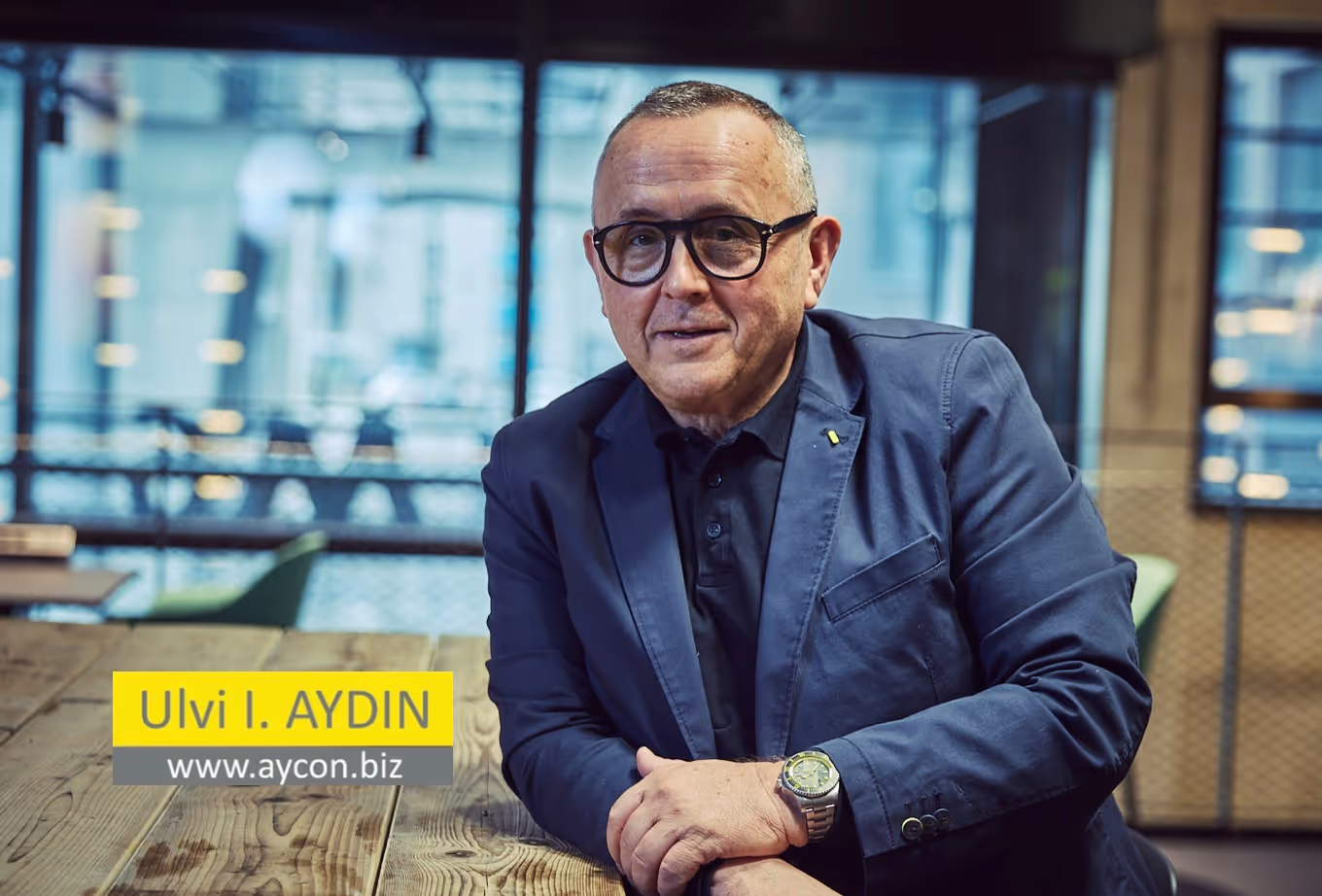
Deutsche Unternehmen tun sich schwer damit, ihre Geschäftsmodelle digital zu transformieren. Gastkolumnist Ulvi Aydin sieht Innovationslabs und kleine, vom Mutterkonzern abgekoppelte Unternehmen als Lösung.
Um digitales Know-how aufzubauen, müssen Unternehmen separate, eigenständige Einheiten gründen, die sich an die Aufgabe machen, digitale Produkte und Prozesse zu entwickeln.
Viele große Unternehmen machen aber den Fehler, ihre gegründeten flexiblen Unternehmen später wieder ins Mutterschiff zu integrieren. Besser ist, das kleine Schnellboot komplett selbständig schwimmen zu lassen, auch gegen das Hauptunternehmen antreten zu lassen und Kannibalisierung zuzulassen.
:devider:
Die deutsche Wirtschaft kann, will aber nicht
Deutsche Unternehmen sind für die Digitalisierung gerüstet, weil sie leistungsstark und flexibel sind. Ist der Umbruch mit Risiken verbunden? Ja, immer. Aber gerade als Unternehmer darf ich Risiken nicht scheuen und mich darauf einstellen können. Wenn mein Produkt gut ist, ich den Markt beobachte und auch kleine neue Teilnehmer ernst nehme, kann ich mein Unternehmen für Veränderungen vorbereiten. Das ist vor allem eine Frage der Haltung.
Leider denken zu viele Unternehmen nicht aus Kundensicht heraus. Stattdessen betreiben sie Nabelschau und erfinden Geschichten von morgen, ohne die bestehenden Organisation umzukrempeln, einzureißen und neu aufzubauen. Stichwort kreative Destruktion. So bleiben sie trotz guter Ideen im Trott des schon immer Dagewesenen, verändern sich nicht genug und werden früher oder später von der Konkurrenz überfahren. Sie verstehen nicht, worum es geht: die Zielgruppe besser zu kennen, als sich selbst. Alles über sie zu wissen.
Das ist keine Frage der Technik, sondern eine Frage der Bereitschaft. Bin ich bereit, mich zum Morgen hin zu bewegen? Sind Sie bereit dafür?
:devider:
Die Systemführerschaft erlangen
Dann nicht lange zögern. Greifen Sie nicht nach der Marktführerschaft, sondern nach der Systemführerschaft. Ein gutes Beispiel ist Daimler. Dort hat man sich gefragt, wie man eine jüngere Zielgruppe erreicht – obwohl diese keine Autos mehr kauft. Oder anders: Wie können wir in einem veränderten System unsere Existenzberechtigung bewahren?
Die Lösung war Car2Go, der Carsharing-Anbieter von Daimler. Selbst wenn das System wieder über Bord geworfen wird, um ein neues System anzustreben:
Der Weg zur Systemführerschaft führt über Information und Kommunikation.
Erst wenn ich die Information darüber habe, wer meine Kunden sind, welche Präferenzen sie haben, wie sie sich tagtäglich verhalten und was sie nicht mögen, kann ich mein Produkt darauf hin entwickeln, meine Kommunikation darauf ausrichten und im Idealfall ein neues System entwickeln, in dem ich das sagen habe.
Dieser Dreiklang ist existentiell: Informationsführerschaft – Kommunikationsführerschaft – Systemführerschaft.
:devider:
:devider:
Die Antwort kommt selten von innen
Unternehmen müssen sich die Fragen beantworten: Wo stehen wir in fünf Jahren? Wird unser Produkt in fünf Jahren noch relevant sein?
Die Antworten dafür kommen selten von innen, denn: Fragen Sie Ihren Frisör, ob Sie eine neue Frisur benötigen, ist seine Antwort klar. Fragen Sie einen Frosch, ob Sie seinen Teich trockenlegen wollen, ist die Antwort ebenfalls klar.
Der uneingenommene Blick von außen, von einem Externen ist da schon hilfreicher, wenn auch immer schmerzhafter. Jemand, der die wunden Punkte anspricht und kein Blatt vor den Mund nimmt, bringt das Unternehmen aber weiter als ein Haufen Ja-Sager.
Wenn Unternehmen flexibler auf den digitalen Wandel reagieren wollen, müssen sie eigenständige Innovationslabs einrichten, in denen Lernräume geschaffen werden und wo Geschäftsmodellegetestet und angewendet werden können. Kleine Unternehmen, die abgekoppelt vom Hauptunternehmen agieren und eigene Lösungen am Markt erkunden.
Der kritikwürdige Axel-Springer-Verlag hat das konsequent vorgemacht und einen traditionellen Zeitungsbetrieb zu einer multimedialen Medienmarke transformiert. Dabei hat die Digitalsparte kontinuierlich das Geschäftsmodell der Printsparte angegriffen.
Oder um es mit den Worten Gisbert Rühls zu sagen, Vorstandsvorsitzender von Klöckner & Co: "Ich kannibalisiere mein Geschäft, bevor es andere tun".
:devider:
Fazit: Mut zu Risiko
Ohne Risiko geht es nicht. Unternehmen müssen ihre Haltung verändern und eigene, kleinere Unternehmen gründen, die neue Wege beschreiten und neue Märkte erobern.
Gelingt es den kleinen Unternehmen, neue Geschäftsmodelle zu entwickeln, sollten die Mutter-Unternehmen nicht versuchen, diese Modelle in Ihre Organisation zu integrieren.
Stattdessen sollten sie voll auf die kleinen Tochterfirmen setzen, diese aufbauen und sich selbst nach und nach abschaffen.
SALES IS A CRAFT. MASTER IT. Everybody talks about sales strategy. Market strategies.
Growth strategies.
Customer strategies.
Go-to-market strategies. Fine. But even the smartest strategy is worthless if the execution is poor. Sales is not only strategy. Sales is craftsmanship. And craftsmanship means doing the basics exceptionally well. Every day. Again and again. 1. SHOW UP. Go and see your customers. Not only on Teams. Not only by email. Not only when there is an RFQ on the table. Get in front of them. Show genuine interest. Understand their business. Understand their problems. Build relationships. And make one thing unmistakably clear: We want your business. Customers should feel that you are willing to work hard for the relationship. 2. PRIORITIZE YOUR CUSTOMERS. Not every customer deserves the same amount of your time. Cluster them. A. B. C. Know which customers generate your business today — and which customers could generate your business tomorrow. Define priorities. Then define the right actions for every cluster. Who needs a personal visit?
Who needs management attention?
Who needs technical support?
Who needs a call every month? Stop treating every customer the same. 3. PUT A NUMBER ON EVERY CUSTOMER. What is the potential? €500,000?
€1 million?
€5 million? Define it. Then define how much of that potential you intend to capture. Because if you don't know where you want to go, don't be surprised where you end up. Or, as the old saying goes: “No wind is favorable to the sailor who does not know which port he is heading for.” Customer potential without a target is just a number. Give every important customer a destination. 4. BE RELENTLESS. Sales requires persistence. Especially with customers who are not buying from you yet. And especially with customers you have lost to competitors. My rule is simple: Approach them ten times. Call. Visit. Follow up. Bring an idea. Bring an expert. Bring a solution. Come back. Again. Again. Again. Not because you want to annoy them. Because you want them to understand: We want you as our customer. And we are willing to fight for your business. 5. WORK. WORK. WORK. There is no sophisticated substitute for hard work in sales. Do your homework. Prepare your meetings. Know the customer. Know the decision-makers. Know the competition. Know the opportunity. Follow up. Keep your promises. Document what you agreed. Define the next step. And then execute it. That is what I mean by clean sales craftsmanship. Sales success is not created in PowerPoint. It is created through hundreds of disciplined actions in the market. Step by step.
Customer by customer.
Opportunity by opportunity. Strategy tells you where to go. Tactics get you there. And execution separates those who talk about growth from those who actually deliver it. Show up. Be prepared. Be persistent. Execute relentlessly. That is sales.
SALES IS A CRAFT. MASTER IT. Everybody talks about sales strategy. Market strategies.
Growth strategies.
Customer strategies.
Go-to-market strategies. Fine. But even the smartest strategy is worthless if the execution is poor. Sales is not only strategy. Sales is craftsmanship. And craftsmanship means doing the basics exceptionally well. Every day. Again and again. 1. SHOW UP. Go and see your customers. Not only on Teams. Not only by email. Not only when there is an RFQ on the table. Get in front of them. Show genuine interest. Understand their business. Understand their problems. Build relationships. And make one thing unmistakably clear: We want your business. Customers should feel that you are willing to work hard for the relationship. 2. PRIORITIZE YOUR CUSTOMERS. Not every customer deserves the same amount of your time. Cluster them. A. B. C. Know which customers generate your business today — and which customers could generate your business tomorrow. Define priorities. Then define the right actions for every cluster. Who needs a personal visit?
Who needs management attention?
Who needs technical support?
Who needs a call every month? Stop treating every customer the same. 3. PUT A NUMBER ON EVERY CUSTOMER. What is the potential? €500,000?
€1 million?
€5 million? Define it. Then define how much of that potential you intend to capture. Because if you don't know where you want to go, don't be surprised where you end up. Or, as the old saying goes: “No wind is favorable to the sailor who does not know which port he is heading for.” Customer potential without a target is just a number. Give every important customer a destination. 4. BE RELENTLESS. Sales requires persistence. Especially with customers who are not buying from you yet. And especially with customers you have lost to competitors. My rule is simple: Approach them ten times. Call. Visit. Follow up. Bring an idea. Bring an expert. Bring a solution. Come back. Again. Again. Again. Not because you want to annoy them. Because you want them to understand: We want you as our customer. And we are willing to fight for your business. 5. WORK. WORK. WORK. There is no sophisticated substitute for hard work in sales. Do your homework. Prepare your meetings. Know the customer. Know the decision-makers. Know the competition. Know the opportunity. Follow up. Keep your promises. Document what you agreed. Define the next step. And then execute it. That is what I mean by clean sales craftsmanship. Sales success is not created in PowerPoint. It is created through hundreds of disciplined actions in the market. Step by step.
Customer by customer.
Opportunity by opportunity. Strategy tells you where to go. Tactics get you there. And execution separates those who talk about growth from those who actually deliver it. Show up. Be prepared. Be persistent. Execute relentlessly. That is sales.
*
Minuten
Define the Potentials!
Strategy alone doesn't get you where you are supposed to be!
Diese fünf unterschiedliche Managementbegriffe werden (sehr) oft vermischt und dadurch entstehen falsche Entscheidungen .Jede Ausgangslage verlangt andere Maßnahmen, Prioritäten und Führungsmethoden.Wer wirtschaftliche Probleme mit wohlklingenden Begriffen beschönigt, verzögert notwendiges Handeln.Die Kernbotschaft lautet: Probleme klar benennen, konsequent handeln und Ergebnisse nachweisen.:devider:Kurze Übersicht:Die fünf Begriffe nach der AbgrenzungWarum Führungskräfte die Begriffe Change-Management, Transformation, Restrukturierung, Sanierung und Turnaround sauber unterscheiden müssen. Wer sie vermischt, riskiert falsche Entscheidungen und verschleiert die tatsächliche wirtschaftliche Lage. Change-Management ...... bedeutet, Prozesse, Systeme oder Arbeitsweisen in einem grundsätzlich funktionierenden Unternehmen zu verändern, während das Geschäftsmodell weitgehend bestehen bleibt. Transformation ...... verändert dagegen die wirtschaftliche Logik und beantwortet die Frage, womit das Unternehmen künftig sein Geld verdient. Restrukturierung ...... passt Strukturen, Kosten und Abläufe an veränderte Marktbedingungen an und sollte möglichst stattfinden, bevor eine Krise entsteht. Sanierung ...... wird notwendig, wenn die Existenz bedroht ist und Liquidität, Handlungsfähigkeit und Überleben gesichert werden müssen. Turnaround ...... bezeichnet die nachweisbare, nachhaltige Wende zum wirtschaftlichen Erfolg als Ergebnis wirksam umgesetzter Maßnahmen. :devider:Jeder dieser Begriffe steht damit für andere Anforderungen an Führung, Prioritäten und Umsetzung. Die zentrale Forderung lautet: Probleme präzise benennen, konsequent handeln und den Erfolg an tatsächlichen Ergebnissen messen.
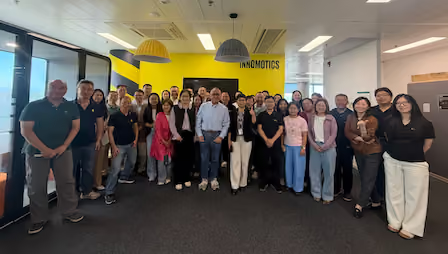
China: A strong market. A key pillar of Innomotics. China is of central importance to Innomotics—as a market, a production hub, and a vital part of our global organization. Our sites in China embody the local roots of our business and our industrial expertise. To me, one thing is clear: success here requires staying close to the customer, understanding the market, reacting quickly, and delivering outstanding performance every single day. Market potential alone doesn’t secure orders; we have to turn that potential into business through a strong local presence, clear accountability, and consistent execution. Our Chinese team plays a crucial role in this. Our colleagues know the customers, understand their requirements, and bridge the gap between our global expertise and the local market. This connection is what makes us strong. My goal is for us to make greater use of the knowledge and experience held by our team in China across the entire Innomotics organization. Collaboration means learning from one another and improving together. Thank you to our colleagues in China for your dedication and your contribution to our shared success. China is a key pillar of Innomotics. Let’s build on this strength. Let’s win customers. Let’s deliver results. Together.
Die Kunst, sich nichts vorzumachen.
Dieses Buch wird nicht jedem gefallen.
Das soll es auch nicht.
Es ist kein Wohlfühlbuch. Kein Ratgeber voller Hoffnung, Motivation und schöner Absichten. Es geht um eine unangenehm einfache Erkenntnis:
Am Ende zählt nicht, was du wolltest. Es zählt, was du getan hast.
Die Tabelle lügt nicht.
Erfolg kann gefährlicher sein als Misserfolg.
Hoffnung ist keine Strategie.
Kontakte sind noch kein Netzwerk.
Stillstand ist keine Stabilität.
Und niemand von uns ist unersetzbar.
Wir machen uns erstaunlich viel vor – über unsere Leistung, unsere Beziehungen, unsere Karriere, unseren Erfolg und vor allem über uns selbst.
Dieses Buch hält dagegen.
Mit Klarheit. Mit Wissenschaft. Mit Erfahrungen aus dem echten Leben. Und manchmal mit einer Sprache, die wehtut.
Denn Veränderung beginnt nicht mit Motivation.
Sie beginnt in dem Moment, in dem du aufhörst, dir selbst Bullshit zu erzählen.
„Die Kunst, sich nichts vorzumachen“
von Ulvi & Vincent Aydin
Coming soon.
Keine Ausreden. Keine Selbsttäuschung. Nur Klarheit.
*
Minuten
No Bullshit!
Am Ende zählt nicht, was du wolltest. Es zählt, was du getan hast.
Jetzt das Buch "Die Kunst, sich nichts vorzumachen!" vorbestellen!
Wenn Sie auf "Alle Cookies akzeptieren" klicken, stimmen Sie der Speicherung von Cookies auf Ihrem Gerät zu, um die Navigation auf der Website zu verbessern, die Nutzung der Website zu analysieren und unsere Marketingmaßnahmen zu unterstützen. Weitere Informationen finden Sie in unserer Datenschutzrichtlinie.